AI-Driven Collaboration: The Future of Hyper-Agility

If the last decade of Agile was about shortening delivery cycles, the next decade is about shortening the distance between decision and delivery.

Welcome to the era of Hyper-Agile Teams — where work happens in real time, collaboration is frictionless, and AI seamlessly bridges the gaps between tools, people, and ideas.

This evolution isn’t about speed for speed’s sake. It’s about responsiveness — the ability to align, adapt, and act the moment new information emerges. And as distributed and hybrid work becomes the norm, this responsiveness depends on something deeper than process: it depends on connection.


The Evolution from Agile to Hyper-Agile

Traditional Agile gave us structure — sprints, ceremonies, and backlogs that brought predictability to complex work. But in today’s distributed world, where teams span continents and time zones, that structure alone isn’t enough.

Modern teams can’t wait for the next sprint review to pivot. They need continuous awareness of priorities, dependencies, and customer feedback.

That’s where Hyper-Agile practices come in.

Hyper-Agile teams use real-time collaboration tools, integrated systems, and AI-assisted workflows to make decisions faster — and smarter. Instead of thinking in two-week cycles, they think in continuous flow, using real-time feedback to guide delivery.


Real-Time Collaboration in Practice

In my own experience leading Agile Coaches and Scrum Masters, my team operates like a Scrum team — complete with a backlog, sprints, and epics tied to strategic goals. But what makes it work at scale is how we collaborate in real time.

We use Lucidspark as our digital workspace for everything from value stream mapping and customer journey mapping to initial epic brainstorming. During a Zoom call, multiple people can contribute simultaneously — refining workflows, identifying bottlenecks, and aligning on next steps without losing momentum.

Once the session is over, that work doesn’t vanish into screenshots or notes. Lucidspark allows us to turn those ideas directly into Jira placeholders, embed links to Confluence, and maintain that original brainstorm as a source of truth.

It’s a living artifact — not documentation for its own sake, but context we can return to, refine, and build upon.

And that’s the key: real-time collaboration turns alignment into action.

Other tools like Miro, Mural, and Microsoft Loop offer similar capabilities. What matters isn’t which one you use — it’s how intentionally you use it. The technology is there to remove friction, not to create another layer of process.


The AI Factor: Collaboration Without Friction

AI is accelerating this shift from Agile to Hyper-Agile by eliminating barriers to flow and connection.

Imagine you’re in a virtual whiteboarding session, and AI automatically clusters ideas by theme, detects dependencies, and generates draft epics based on team input. That’s no longer futuristic — Lucid’s AI, Miro Assist, and Notion AI are already doing it.

In my own work, I use ChatGPT to help create epics and user stories from the rough ideas that come out of these workshops. I provide the context — what we want to achieve, our structure for acceptance criteria, and any constraints — and AI produces concise, actionable stories.

This not only saves time but gives teams a structured starting point for refinement. I’ve even piloted this approach with development and HR Technology teams, and it’s been a game changer.

AI isn’t doing the thinking for us — it’s giving us more space to think together. It handles the administrative overhead so we can focus on what matters: collaboration, creativity, and problem-solving.

Hyper-Agile isn’t just faster; it’s freer.


From Synchronous to Asynchronous and Back Again

One of the biggest myths about hyper-agility is that it means being “always on.” In reality, the best Hyper-Agile teams blend synchronous collaboration (real-time working sessions) with asynchronous follow-through.

AI tools make this balance possible. Meeting assistants can summarize discussions, highlight decisions, and draft next steps for review. Whiteboards and project boards sync across time zones so work keeps flowing even when people aren’t online at the same time.

This blend is critical for distributed teams — it ensures that real-time collaboration enhances flow without eroding focus.

When done right, it replaces chaos with clarity.


Cultural Shifts for Hyper-Agility

Technology may enable Hyper-Agile collaboration, but culture determines whether it thrives.

A truly Hyper-Agile team is one that:

  • Shares ownership — decisions aren’t top-down; they emerge from collective insight.
  • Values transparency — everyone can see what’s happening, why it’s happening, and how it connects to outcomes.
  • Embraces experimentation — ideas can evolve instantly, and failure is treated as feedback.
  • Builds trust through visibility — real-time tools make work observable without turning it into surveillance.

In this environment, leadership becomes facilitation. The role of an Agile Coach, Product Owner, or leader shifts from directing work to creating clarity and safety so collaboration can flourish.

And that cultural foundation — not the tools — is what transforms speed into sustainable delivery.


Measuring Outcomes, Not Activity

In a Hyper-Agile system, it’s tempting to equate speed with success. But true agility isn’t about how fast we move — it’s about how effectively we deliver value.

That’s why metrics must evolve alongside the technology.

Rather than tracking output (number of meetings, tasks completed, or documents produced), high-performing teams measure outcomes:

  • Did collaboration accelerate decision-making?
  • Did we reduce cycle time without increasing rework?
  • Are our customers experiencing better results?
  • Did our process enable innovation instead of bureaucracy?

When AI and collaboration tools are used intentionally, the answer to all of those questions is often yes — not because they replace humans, but because they empower humans to connect more deeply and act more decisively.


The Future of Hyper-Agility

As AI becomes more integrated into every collaboration tool, we’ll see the lines between ideation, delivery, and feedback blur even further.

We’re entering an age where your virtual workspace might proactively surface related documentation, auto-generate Jira issues, suggest backlog priorities, and even draft retrospectives based on sprint data.

But here’s the thing: the tools don’t make teams Hyper-Agile — the mindset does.

Hyper-Agile teams understand that communication is continuous, learning is collective, and speed is only valuable when it serves clarity.

The goal isn’t to do more; it’s to decide better and deliver smarter.


Bringing It All Together

The rise of Hyper-Agile teams represents a fundamental shift in how we think about collaboration. It’s not about more meetings or faster sprints — it’s about building connected systems of work where ideas can flow from thought to action without friction.

AI helps by automating the overhead. Tools like Lucidspark, Miro, and Microsoft Loop help by making those ideas visible and actionable. But people — their trust, creativity, and shared purpose — remain at the heart of it all.

So whether you’re mapping a customer journey, designing a value stream, or creating your next big epic, lean into what’s available to you. Use your tools fully. Build that digital whiteboard. Let AI handle the heavy lifting.

And remember — agility was never about moving faster than everyone else. It was about moving together, deliberately, and in the right direction.

That’s what makes a team truly Hyper-Agile.


References

  • Lucid, The Rise of AI-Powered Collaboration (2025)
  • Gartner, Future of Work: Real-Time Collaboration in the Age of AI (2024)
  • Atlassian, From Agile to Hyper-Agile: How AI is Changing Team Collaboration (2025)
  • DORA, Accelerate: State of DevOps Report (2024)

Spec-Driven Development Meets Agile: A Hybrid Approach

Agile has always prided itself on flexibility — responding to change over following a plan. But as organizations have matured, the pendulum has swung between two extremes: unstructured agility on one end and rigid governance on the other.

Now, we’re seeing a convergence — a hybrid future where Spec-Driven Development (SDD) and Agile meet to balance clarity with creativity. It’s a model that honors Agile’s adaptability while embracing the discipline needed for large-scale systems, compliance-heavy industries, and multi-team coordination.

The challenge? Doing it without losing the essence of agility.


Why the Shift Is Happening

For years, Agile was the antidote to traditional waterfall methods that locked teams into fixed requirements. But as Agile scaled, new complexities emerged: multiple teams, shared dependencies, and overlapping product domains.

Suddenly, “just-in-time” requirements weren’t always enough. Teams needed stronger alignment, clearer boundaries, and predictable delivery models — especially when integrating with systems that demanded regulatory precision or safety validation.

That’s where Spec-Driven Development began to re-enter the conversation.

SDD emphasizes clear specifications, structured documentation, and traceable requirements. When applied thoughtfully, it doesn’t slow teams down — it creates shared understanding. The problem has never been the spec itself; it’s been treating the spec as static rather than living.

The hybrid model keeps the structure but invites agility into how that structure evolves.


Where Agile Still Wins

Agile remains unbeatable when it comes to adaptability, collaboration, and learning through iteration. It’s rooted in human feedback and fast loops — qualities that keep teams responsive to real customer needs.

In a purely spec-driven environment, teams risk overconfidence in the plan. In a purely Agile one, they can fall into chaos without shared direction. The hybrid model ensures we don’t sacrifice either.

It says: Define enough to align, but not so much that you eliminate discovery.

Agile wins when uncertainty is high — when you’re breaking new ground or solving novel problems. Specs win when the work is repeatable, regulated, or safety-critical. Blending the two allows leaders to allocate structure strategically, instead of applying one-size-fits-all methods.


How Hybrid Delivery Works in Practice

At its best, a hybrid delivery model builds a spec for stability and uses agility for innovation.

Here’s how it plays out across a product lifecycle:

  1. Define the constants.
    Establish what’s non-negotiable — the regulatory requirements, security constraints, and architectural foundations that create stability. These form your “spec-driven” backbone.
  2. Iterate on the unknowns.
    Use Agile principles to explore customer problems, prototype solutions, and validate assumptions quickly. The areas of uncertainty should remain flexible, open to learning and adaptation.
  3. Keep the spec living.
    Treat specifications like user stories — always evolving as you learn. A living spec creates traceability and adaptability.
  4. Integrate feedback loops.
    Every iteration should refine not just the product, but the spec itself. This turns documentation into a tool for discovery rather than a relic of planning.
  5. Use AI to bridge the two worlds.
    AI tools can analyze changes across systems, generate traceable documentation automatically, and surface where evolving code has drifted from the original design intent. This is where structure meets speed.

AI doesn’t just automate documentation — it enhances alignment. Imagine an intelligent assistant that flags when a user story’s acceptance criteria conflict with a system constraint, or one that keeps design specs synchronized with code repositories.

That’s not theoretical anymore. Tools from GitHub Copilot to Atlassian Intelligence are beginning to make this hybrid agility real.


The Cultural Bridge: Governance with Growth

Hybrid models require more than process adjustments — they demand cultural balance.

Traditional governance often feels like control. Agile governance, on the other hand, feels like enablement — creating safety to experiment within understood boundaries.

The best organizations understand that discipline is not the opposite of agility; it’s a prerequisite for scaling it responsibly.

In Agile culture, we want teams to experiment, but not in isolation. We want to minimize bureaucracy, but not at the cost of quality or compliance. Hybrid delivery achieves this by aligning everyone on outcomes while still giving teams autonomy in how they achieve them.

That alignment comes from shared language and mutual trust — not more meetings or heavier documentation.

When I’ve coached organizations through this transition, I’ve found that the biggest barrier isn’t process—it’s fear. Teams fear losing autonomy. Leaders fear losing visibility. The hybrid approach, done right, replaces both with confidence—a clear view of what matters and freedom to deliver it.


Rethinking Success: Outcomes Over Outputs

Hybrid delivery models can only succeed when success is defined by outcomes, not outputs.

This is where many companies get it wrong. They fall back into spec-driven metrics—how many documents completed, milestones hit, or hours logged. But none of those guarantee impact.

Instead, hybrid agility demands a focus on outcomes:

  • Did the product solve the intended customer problem?
  • Did it deliver measurable business value?
  • Did the team learn something that improves future delivery?

This shift connects directly to value stream thinking — looking beyond the completion of tasks to the flow of customer value through the system.

Agile and SDD can coexist beautifully when guided by shared purpose and metrics that matter.


Why Hybrid Is the Future

The reality is this: most organizations already operate in a hybrid world, even if they don’t call it that. They’ve combined elements of SAFe, Scrum, Kanban, and systems engineering.

What’s changing in 2025 is intentionality — leaders are starting to design hybrid models consciously, not accidentally.

We’re seeing it in regulated industries like healthcare and finance, where compliance requires traceability but innovation demands speed. We’re seeing it in global tech companies integrating AI into core products.

Hybrid agility gives teams the freedom to innovate responsibly. It acknowledges that agility without alignment leads to chaos, and alignment without agility leads to stagnation.

The future isn’t about picking sides between “spec” and “scrum.” It’s about creating a system where structure supports discovery—not suffocates it.


Bringing It All Together

In the early days of Agile, the manifesto asked us to value working software over comprehensive documentation. That principle still holds. But in a complex, interconnected world, some documentation isn’t just valuable — it’s vital.

The difference today is that our documentation can live, breathe, and evolve. It can become a conversation instead of a contract.

That’s what this hybrid future represents: a return to purpose-driven structure, where plans exist to guide learning, not restrict it.

When done right, it’s not Agile vs. Spec-Driven — it’s Agile and Spec-Driven, aligned around shared outcomes, supported by intelligent systems, and driven by teams who understand both the “why” and the “how.”

That’s not a compromise. That’s maturity.


References

  • Gartner, Agile Outlook 2025: Balancing Speed and Stability
  • Atlassian, Intelligent Collaboration and the Hybrid Future of Agile (2024)
  • DORA, Accelerate: State of DevOps Report (2024)

  • McKinsey Digital, Engineering Excellence and the Future of Hybrid Delivery (2024)

Redefining ‘Done’: Embracing Value Stream Thinking

For as long as Agile has been around, teams have measured progress by velocity, burndown, and sprint completion. We celebrate when work is “done.” But over the years, “done” has become one of those words that means everything—and nothing.

It’s time we redefine it.

In 2025, “done” isn’t about completing work. It’s about creating value—measurable, meaningful, and sustainable value that improves outcomes for customers, teams, and organizations.

That’s where Value Stream Thinking comes in.


The Evolution of “Done”

In the early days of Agile, the Definition of Done was simple and tactical: code committed, tested, deployed, documented. It gave teams clarity and accountability. But as organizations scaled, that definition became limited.

Teams were hitting their sprint goals, yet customers weren’t always happier. Projects were finishing on time, but outcomes weren’t improving. We were producing more, but not necessarily better.

I’ve worked in multiple companies where success was measured almost entirely by output—number of features shipped, tickets closed, or sprints completed. Those metrics may look good on dashboards, but they don’t tell you if you’re solving the right problems.

Value Stream Thinking challenges that. It forces us to zoom out from the backlog to the big picture—to focus on flow, impact, and purpose.


What Is Value Stream Thinking?

A value stream is the entire flow of work from idea to outcome—everything it takes to deliver value to a customer.

It’s not just development or delivery. It includes strategy, design, operations, feedback, and learning. Value stream thinking asks us to map that entire system, identify friction points, and optimize the flow of value across it.

Lean and DevOps communities have long embraced this concept, but its relevance to Agile has never been stronger.

When teams think in terms of value streams instead of functions or projects, they break down silos. They start asking questions like:

  • Where does work get stuck?
  • How long does it take for an idea to become customer value?
  • What steps actually add value—and which ones just create busywork?

Those questions don’t just improve delivery. They change the conversation from what are we building? to why are we building it?


Mindshift: From Output to Outcome

To truly adopt value stream thinking, we need a mindset change—and this is where many organizations stumble.

Too many still prioritize activity over impact. They’re driven by quarterly numbers, stakeholder demands, and delivery checkboxes. But optimizing for output creates a false sense of progress. You can ship 100 features that make no difference to your users.

Outcome-driven organizations measure success differently. They focus on customer satisfaction, reduced friction, increased retention, and business adaptability.

In my experience, the hardest part of this transition isn’t the tooling—it’s the thinking. You can’t transform your value streams if leadership still rewards teams for volume instead of value.

Those companies that look beyond quarterly metrics are the ones that change their industries for good.

Simon Sinek describes this perfectly in The Infinite Game when he says,

“Finite players play to beat the people around them. Infinite players play to be better than themselves.”

Companies like Apple, Patagonia, and Costco didn’t win because they moved faster than competitors. They won because they focused on why they existed, who they served, and how they could improve lives—not just balance sheets.

Sinek’s Start With Why, Leaders Eat Last, and The Infinite Game are all essential reads for anyone leading Agile transformation today. He tells the stories of organizations that stopped measuring success by competition and started measuring it by contribution. That’s the essence of value stream thinking.


The Three Pillars of Value Stream Thinking

1. Visibility

You can’t improve what you can’t see. Value stream mapping provides a visual representation of how work flows—and where it doesn’t.

By identifying handoffs, bottlenecks, and redundancies, organizations gain a shared understanding of where time and value are lost.

But visibility isn’t just about data dashboards. It’s about transparency of intent. Everyone—from leadership to engineers—should understand how their work connects to business and customer outcomes.

When teams see how their contributions fit into the larger system, engagement skyrockets.

2. Flow

Flow isn’t just about moving faster. It’s about removing friction and waste so value moves smoothly from idea to delivery.

AI is becoming a valuable ally here. Intelligent observability and workflow tools can now analyze flow efficiency, predict bottlenecks, and recommend optimizations automatically.

For example, I use AI in my own Agile coaching practice to generate and refine epics and user stories for my team. That automation saves time and allows us to focus on what matters, not just how we structure it.

Platform and delivery teams can do the same—using AI to highlight inefficiencies or automate routine steps so humans can focus on creative problem-solving.

That’s the power of pairing flow with focus.

3. Feedback

Every value stream needs feedback loops that connect customer outcomes back to the teams delivering them.

That means looking beyond project retrospectives or sprint reviews—it means continuous measurement of real-world impact.

Are customers adopting the feature we built? Did it improve their experience? Did it align with our purpose?

When teams measure outcomes this way, they start designing with empathy and strategy, not just deadlines.


Why This Requires Cultural Alignment

Value stream thinking can’t thrive in a culture that prizes speed over substance.

It requires psychological safety to question the status quo. It requires leaders who prioritize long-term outcomes over short-term optics. And it requires shared accountability across departments—not “engineering vs. product,” but “we’re all part of the same flow.”

The best organizations I’ve seen practice value stream thinking not as a framework, but as a philosophy. They understand that agility isn’t about delivering faster; it’s about delivering better.

They empower teams to challenge wasteful processes. They reward learning, not just delivery. They understand that simplicity and purpose drive innovation far more than complex frameworks ever could.


The New Definition of Done

If “done” used to mean something is shipped, the new definition should be this:

“Done means we’ve delivered measurable value to the customer—and learned something that helps us deliver even more next time.”

That’s a subtle shift, but it’s everything. It turns Agile back into what it was always meant to be: a feedback-driven, purpose-centered way of working.

And when leaders embrace that mindset—when they stop chasing quarterly wins and start playing the infinite game—they don’t just improve their teams. They transform their industries.

Because in the end, output ends when the sprint ends. Outcome endures.


References

  • Simon Sinek, Start With Why (2009)
  • Simon Sinek, Leaders Eat Last (2014)
  • Simon Sinek, The Infinite Game (2019)
  • Gartner, Agile Outlook 2025: The Age of Contextual Agility
  • DevOps Research and Assessment (DORA), Accelerate State of DevOps Report 2024
  • McKinsey & Company, Value Stream Excellence in Digital Transformation (2024)

From DevOps to Platform Engineering: A Cultural Shift

When DevOps first entered the scene, it felt revolutionary — breaking down silos between development and operations, shortening delivery cycles, and empowering teams to own what they build. But like every great movement, it has evolved.

In 2025, we’re witnessing the rise of Platform Engineering — DevOps’ next act.

Where DevOps asked teams to “build it and run it,” platform engineering says, “Let’s build the system that makes it easier for everyone to build and run.”

It’s a subtle but powerful shift — from individuals owning pipelines to organizations owning the developer experience. And for Agile teams, that shift represents a huge opportunity to deliver faster, safer, and smarter.


From DevOps to Platform Engineering

DevOps was never meant to be a department. It was a mindset — a set of practices designed to improve collaboration, automation, and feedback loops between development and operations. But as organizations scaled, many discovered an unintended consequence: DevOps fatigue.

Developers were spending too much time managing infrastructure instead of focusing on delivering value. Toolchains became sprawling and inconsistent. And despite good intentions, velocity often stalled under the weight of complexity.

Platform engineering emerged as the natural evolution — creating dedicated teams that build and maintain internal platforms to support the rest of the organization. These platforms act as self-service ecosystems that abstract away repetitive, operational tasks, giving product teams the autonomy to focus on innovation.

Put simply, DevOps broke the wall. Platform engineering builds the bridge.


The Agile Connection

At its core, platform engineering aligns perfectly with Agile principles: empowerment, collaboration, and continuous improvement.

Instead of creating more hierarchy or process, platform teams function as enablers — reducing cognitive load for developers and removing barriers to flow.

In many Agile organizations, product teams rely on the platform team for tools, environments, and automation pipelines. That relationship only works when there’s a shared culture of trust and partnership.

If a platform team acts like a gatekeeper — dictating tools or enforcing standards without context — agility dies. But when the platform team acts as a service provider, co-creating with the teams they support, agility thrives.

That’s why the best platform teams treat their users (the developers and delivery teams) as customers. They use feedback loops, prioritize backlogs, and run retrospectives just like any other Agile team.

They’re not just building infrastructure — they’re delivering value streams.


How AI Is Accelerating Platform Engineering

Artificial Intelligence is playing an increasingly important role in how modern platforms operate.

AI-driven observability tools now predict system bottlenecks before they happen. Machine learning models optimize CI/CD pipelines by analyzing historical build data. Intelligent assistants help developers troubleshoot deployment issues or even write infrastructure-as-code configurations in real time.

And as someone who’s experimented with using AI to accelerate Agile delivery, I see enormous potential here.

Imagine platform teams using AI to automatically generate documentation for new pipelines, detect underused resources, or identify recurring incidents across teams.

Just as I use ChatGPT to create epics and user stories for my Agile coaching team, platform engineers can use similar tools to generate and refine infrastructure templates, draft runbooks, or even simulate changes before deployment.

It’s not about replacing engineering skill — it’s about amplifying it.

When done right, AI doesn’t remove human judgment; it enhances it. It enables teams to focus on strategy and outcomes instead of routine maintenance.


Metrics That Matter: Measuring Outcomes, Not Outputs

One of the biggest traps in both Agile and DevOps has always been measuring the wrong things.

Counting deployments, tickets closed, or story points completed may look impressive, but they don’t tell you whether you’re actually delivering value. Platform engineering gives us a chance to rethink metrics in a way that’s truly outcome-driven.

Here are a few examples:

  • Developer Experience Metrics: How quickly can a new developer ship their first change? How easy is it to deploy safely? These measure friction, not just activity.
  • Flow Efficiency: How much time does work spend in progress vs. waiting? This reveals systemic bottlenecks that slow delivery.
  • Change Failure Rate: Are deployments reliable? Lowering this indicates platform maturity and resilience.
  • Lead Time for Changes: How long does it take from code commit to production? Faster, safer flow means happier teams and customers.
  • Value Stream Health: Are we improving how value moves through the system, not just how fast we push code?

As Gartner’s Agile Outlook 2025 report notes, “Outcome-based metrics are the single most accurate indicator of true agility — measuring whether value was realized, not just delivered.”

That’s exactly where platform engineering shines: it creates the conditions for better flow, higher reliability, and more sustainable delivery — not through more meetings or rules, but through thoughtful automation and intentional design.


Cultural Alignment: The Real Engine Behind the Platform

Technology alone doesn’t make a platform successful. Culture does.

Building a healthy relationship between platform and product teams requires the same principles we teach in Agile coaching: transparency, feedback, and shared ownership.

Here are a few cultural lessons I’ve seen separate thriving platform initiatives from struggling ones:

  1. Co-creation Over Command
    Platform teams succeed when they build with product teams, not for them. Invite developers into discovery sessions, gather user feedback, and treat platform improvements like customer-centric product enhancements.
  2. Empowerment Over Enforcement
    Instead of forcing adoption through mandates, platform teams can build irresistible products — ones that are so easy to use and so reliable that teams want to use them.
  3. Psychological Safety
    Just as Agile teams need psychological safety to experiment, platform engineers need it to innovate. When failures are treated as learning opportunities, platforms evolve faster.
  4. Shared Purpose
    Everyone — from platform engineers to product owners — should be aligned on one thing: delivering value to the customer. The platform isn’t successful when pipelines are faster; it’s successful when outcomes improve.

This alignment is what turns platform engineering from a tech initiative into an organizational capability.


Bringing Platform Thinking to Agile Coaching

Even outside of software engineering, the mindset behind platform engineering applies to Agile leadership.

As Agile coaches, we build platforms for people — frameworks, tools, and environments that help teams thrive. When we remove friction from processes, standardize what should be standardized, and free teams to innovate within safe boundaries, we’re doing platform engineering in a different form.

And, just like technical platforms, our success isn’t measured in how many ceremonies we run or templates we create. It’s measured in whether teams are learning faster, delivering value sooner, and growing more capable over time.


The Road Ahead

Platform engineering represents more than just a new technical discipline — it’s a cultural evolution. It extends the spirit of DevOps, strengthens Agile delivery, and creates a foundation where teams can move with confidence and autonomy.

As AI continues to mature, the best platform teams will be those that blend automation with empathy — using intelligent systems to reduce toil and elevate human problem-solving.

In that sense, platform engineering is really about the same thing Agile has always been about: building systems that serve people, not the other way around.

Because at the end of the day, great platforms don’t just accelerate delivery. They amplify culture.

And in 2025, that might be the most powerful outcome of all.


References:

  • Gartner, Agile Outlook 2025: The Age of Contextual Agility
  • McKinsey & Company, The Rise of Platform Engineering in Enterprise Delivery (2024)
  • Puppet, State of DevOps Report (2024)
  • GitHub, State of AI in Software Development (2024)

Master Agile Principles: The Power of Regular Reflection

Back to Basics Series – Principle 12

At regular intervals, the team reflects on how to become more effective, then tunes and adjusts its behavior accordingly.

https://agilemanifesto.org/principles.html


What Does It Mean?

Agile isn’t about sticking rigidly to a plan or blindly following a process. Continuous improvement is baked into the methodology itself. Regular reflection allows teams to inspect what’s working, identify what isn’t, and make changes that actually improve outcomes.

This principle emphasizes rhythm over perfection. It’s not a one-time event; it’s a recurring habit that keeps the team evolving and learning.


My Experience

I’ve seen teams sprint after sprint without pausing to reflect. They executed flawlessly on paper, but recurring issues—missed dependencies, unclear requirements, process inefficiencies—kept cropping up.

When I introduced structured retrospectives and reflection practices, even small adjustments had a huge impact. One team identified that their daily stand-ups were too long and unfocused. By tightening the format and focusing on blockers, they shaved 30 minutes per day off their meetings and surfaced issues faster.

The key is not to wait for a crisis. Reflection should be proactive and continuous, allowing the team to adapt before problems escalate.


Why This Matters

Regular reflection enables teams to:

  • Identify and eliminate inefficiencies
  • Strengthen collaboration and communication
  • Improve quality and delivery speed
  • Adapt to changing circumstances proactively

Teams that skip reflection risk repeating mistakes, building frustration, and stalling improvement. Agile isn’t just about speed—it’s about learning and evolving.


Take It to Your Team

For your next retrospective or sprint review:

  • Ask: What worked well this sprint? What didn’t?
  • Identify one process or habit to experiment with in the next sprint.
  • Set a short feedback loop: Check in mid-sprint to see if the adjustment is helping.

Reflection isn’t optional—it’s the mechanism that transforms good teams into great, adaptable, high-performing teams.

Empowering Self-Organizing Teams for Agile Success

Back to Basics Series – Principle 11

The best architectures, requirements, and designs emerge from self-organizing teams.

https://agilemanifesto.org/principles.html


What Does It Mean?

Self-organizing teams are empowered to make decisions about how they work, how they solve problems, and how they deliver value. Agile trusts that the people closest to the work are best equipped to determine the approach—without being micromanaged from above.

This principle doesn’t mean chaos or lack of accountability. It means giving skilled, motivated teams the environment, tools, and trust to organize themselves. When teams take ownership, innovation, creativity, and efficiency naturally follow.


My Experience

I’ve worked with teams where every decision had to be approved by a manager or architect. Progress was slow, morale was low, and opportunities for innovation were lost.

Contrast that with a self-organizing team I coached in a fintech environment. They defined their own workflow, took ownership of dependencies, and collaboratively solved bottlenecks. Managers and stakeholders provided support, guidance, and trust—but didn’t dictate day-to-day execution. The team delivered faster, made smarter decisions, and produced higher-quality software.

The difference? Ownership. When teams feel accountable and empowered, they step up in ways that no process or document can enforce.


Why This Matters

Self-organization enables:

  • Faster problem-solving and decision-making
  • Ownership and accountability
  • Creative, innovative solutions

Teams that aren’t self-organizing risk:

  • Bottlenecks in approvals
  • Reduced morale and motivation
  • Solutions that don’t leverage the full expertise of the team

Agility is about enabling people, not controlling them. Self-organization is the engine that drives innovation and responsiveness.


Take It to Your Team

In your next retrospective or planning session:

  • Ask: Where did the team wait for direction this sprint?
  • Identify one area where the team could take ownership next sprint.
  • Encourage reflection: How can we remove bottlenecks or approvals that slow our decision-making?

Empowering the team to self-organize doesn’t mean stepping back completely—it means providing support, guidance, and trust so they can deliver their best work.

Maximizing Value through Simplicity in Agile

Back to Basics Series – Principle 10

Simplicity—the art of maximizing the amount of work not done—is essential.

https://agilemanifesto.org/principles.html


What Does It Mean?

Simplicity isn’t just a design goal—it’s a mindset. Agile encourages us to focus on what really matters and cut out what doesn’t. Every unnecessary feature, report, or process step consumes energy, introduces risk, and slows delivery.

The art of maximizing work not done is about prioritizing value over busywork. It’s about trimming the fat so the team can focus on delivering outcomes that truly matter to customers.


My Experience

I’ve coached teams that overloaded their sprints with “nice-to-have” work—features that looked impressive but added little real value. Progress was slow, frustration mounted, and the team lost sight of what the customer really needed.

In another case, a team took a ruthless approach to simplicity. Every user story had to answer one question: Does this deliver clear value to the customer? Work that didn’t meet that standard was deferred or removed. The result? Faster delivery, less rework, and higher satisfaction—for both the team and the customer.

Simplicity also applies to processes. I’ve seen retros, planning sessions, and reporting rituals get bloated with unnecessary steps. Streamlining these often frees time for what really counts: delivering and improving working software.


Why This Matters

Ignoring simplicity leads to:

  • Overcomplicated software
  • Longer delivery cycles
  • Frustrated teams and customers

Embracing simplicity enables:

  • Faster, more focused delivery
  • Easier adaptation to change
  • Clearer focus on value

Agility is not about doing more—it’s about doing what matters and doing it well.


Take It to Your Team

In your next retrospective, try this:

  • Ask: What work did we do this sprint that added little or no customer value?
  • Brainstorm: What can we remove or simplify in the next sprint?
  • Challenge each story, feature, or process step: Does this maximize value or just add complexity?

Remember: every bit of complexity you eliminate is time and energy the team can spend on delivering real value.

Why Sustainable Development is Key to Agile Success

Back to Basics Series – Principle 8

Agile processes promote sustainable development. The sponsors, developers, and users should be able to maintain a constant pace indefinitely.

https://agilemanifesto.org/principles.html


What Does It Mean?

This principle is simple, but too often ignored: Agile isn’t a race to exhaustion. Teams should be able to maintain a steady, predictable pace without burning out. Sustainable development isn’t about slowing down—it’s about balancing delivery with long-term productivity and well-being.

Agile recognizes that overworked teams produce lower quality, higher defect rates, and less innovation. True agility comes from consistency, not frantic sprints of heroics.


My Experience

I’ve coached teams that were stuck in “crunch mode” culture, sprint after sprint. The result? Stress, mistakes, and disengagement. People were exhausted, and velocity began to fluctuate wildly. Management assumed effort equaled progress—but it didn’t.

In contrast, I’ve also worked with teams that embraced a sustainable pace. One team deliberately sized work for a realistic, maintainable sprint, included buffer time for unexpected issues, and respected weekends and personal time. Over a few quarters, productivity stabilized, quality improved, and morale soared. They weren’t faster on day one—but they delivered more reliably over the long term.


Why This Matters

Sustainable pace is not optional—it’s essential. Without it:

  • Teams risk burnout and turnover.
  • Defects and technical debt grow.
  • Innovation slows to a crawl.

With sustainable pace:

  • Teams maintain focus and energy.
  • Delivery is predictable and consistent.
  • Trust and morale improve.

Agile isn’t about heroics—it’s about creating a rhythm of work the organization can maintain indefinitely.


Take It to Your Team

In your next retrospective, ask:

  • Did anyone feel sprint goals were unrealistic or overwhelming?
  • Where did we overcommit, and where did we leave buffer for uncertainty?
  • Brainstorm one change to improve the team’s pace for the next sprint (e.g., realistic story sizing, planned slack, or stricter prioritization).

Sustainable pace isn’t a shortcut—it’s the foundation for long-term success.

The Power of Frequent Software Delivery

Deliver working software frequently, from a couple of weeks to a couple of months, with a preference to the shorter timescale.

https://agilemanifesto.org/principles.html


What Does It Mean?

This one seems obvious, right? Deliver frequently, learn, improve. And yet, I still find myself in conversations about quarterly releases, long stabilization phases, and “big bang” launches. Delivering frequently doesn’t just mean shipping faster—it means building a cadence where feedback can flow back into the product.

Think of it as shortening the distance between building something and learning whether it actually works for the customer. The shorter that loop, the less risk we carry and the more relevant our product becomes.


My Experience

I’ve seen both sides of this coin. On one hand, I’ve coached teams that release every sprint (or even multiple times a sprint) and thrive on the immediate feedback. On the other hand, I’ve also worked in environments where quarterly releases were the “standard.” In those cases, the teams didn’t lack talent or effort—they lacked opportunity.

The backlog filled up with assumptions. Dependencies piled higher with every sprint. By the time the release finally rolled out, some of the features were already outdated, and others didn’t work quite as intended. The team had spent months working in the dark, only to discover the light switch was in the wrong room.

Frequent delivery doesn’t guarantee success, but it does guarantee learning sooner. And learning sooner is almost always cheaper than learning later.


Why This Matters

Cadence matters more than calendar. When teams deliver frequently, they don’t just check a box—they build a rhythm of feedback, improvement, and adaptation.

Contrast that with the “big bang” approach:

  • Risk piles up quietly until it explodes at release time.
  • Feedback arrives too late to do anything about it.
  • Teams end up in crunch mode, patching problems instead of preventing them.

Frequent delivery flips that script. Small, frequent releases reduce risk, increase customer confidence, and create momentum. They also force us to prioritize what’s really valuable instead of endlessly polishing what’s “next.”


Take It to Your Team

In your next retrospective, ask:

  • How often do we release working software today?
  • What’s the biggest barrier keeping us from releasing more frequently?
  • If we had to deliver something every sprint, what would need to change?

Even if you don’t move to every-sprint releases tomorrow, surfacing the barriers is the first step toward breaking them down.

Back to Basics Series – Principle 1


Our highest priority is to satisfy the customer through early and continuous delivery of valuable software.


https://agilemanifesto.org/principles.html

What Does It Mean?

There are many interpretations of this principle, but this one is mine. Honestly, I’m not looking to make any ground-breaking revelations here. I’m looking to break it down to get back to basics. It means what it means. In the software world, the path to customer satisfaction should be delivering early and often, but things are not always that black and white. Let’s take an expository approach in evaluating this, the first agile value.

Our highest priority is to satisfy the customer.

This principle says that we will satisfy the customer through early and continuous delivery of valuable software. However, I think there’s a reason why the group at Snowbird listed customer satisfaction first. Without customer satisfaction, we have no business. Bottom line. According to the great (or not-so-great) collective that is Wikipedia, customer satisfaction “is a measure of how products and services supplied by a company meet or surpass customer expectation.” Whether or not the software you and your team work on is customer-facing, ultimately everything we build has an end-user. If that end-user is not satisfied (that’s a whole other blog topic), then we need to go back to the drawing board to make sure s/he is. Customer satisfaction is why we do what we do, and their continued satisfaction keeps the lights on.

Early & Continuous Delivery

I actually dreaded writing this entry because I’m currently stuck in quarterly release hell. My present reality provides no fabulous insights or special instructions to get your company (or mine, for that matter) releasing early or often.

But what does it mean? At the risk of sounding like Captain Obvious, delivering software early and often is just that. A better question is why should we do it? The sooner we deliver working software to our customers, then the sooner we get feedback. We can then inspect and adapt that feedback to better form what’s in our hopper (roadmap, battle plan, whatever you want to call it). We do this to keep our customers happy, so they continue to pay us, so we continue to stay in business. Yes? Yes. If we do this in regular, short cycles, then we’ll hopefully align ourselves with ever-fluctuating market demands. This actually points back to the “customer satisfaction” part of this principle.

Valuable Software

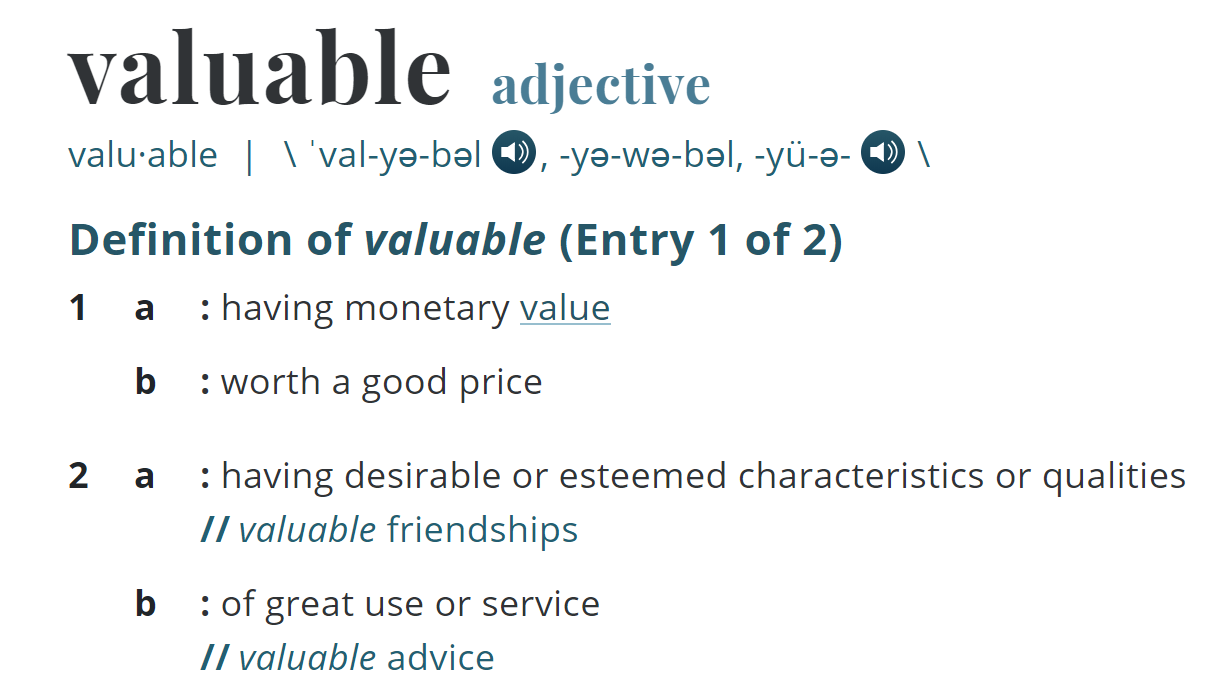
The final part of this principle is valuable software. According to Merriam-Webster dictionary, the definition of valuable is having desirable or esteemed characteristics or qualities OR is of great use or service. Google “valuable software” and a myriad of articles pop up on what actually constitutes value. Quality is obviously a factor (but that’s also listed in a later Agile Principle; we’ll cover that), but ultimately, the team needs to determine what is valuable to the customer. That could mean anything from an intuitive user interface to speedy access to data. If the customer finds no value in what you’ve delivered, then what’s the point? This part, too, points back to the “customer satisfaction” part of this principle.

Customer Satisfaction is Key

To wrap it up, customer satisfaction is the key. Early and continuous delivery provides the feedback loop that keeps us informed, and delivering valuable software keeps our customers happy.