
-

Adopting an Agile Mindset Across the Organization
Agility transcends software, emerging as a crucial mindset for all business functions facing rapid changes. Organizations must focus on shared values and behaviors, with leaders modeling agility through inquiry and adaptability. By fostering collaboration and prioritizing learning over mere output, companies enhance resilience and responsiveness, driving continuous value delivery.
-

Agile & AI: From Genie-Level Hype to Practical Collaboration
AI is likened to an unpredictable genie in Agile workflows, offering powerful possibilities alongside risks. Agile practitioners should prioritize safety by framing AI adoption as experimentation, use AI to enhance human capabilities rather than replace them, focus on clear objectives, and cultivate adaptability in uncertainty. This ensures agility and collaborative innovation.
-

Revisiting the Agile Manifesto: Are We Truly Being Agile?
Over two decades after the Agile Manifesto, its principles are often misunderstood by organizations focusing on methodology instead of philosophy. Industry leaders advocate for reassessing Agile values to promote adaptability, collaboration, and continuous learning. True agility emphasizes mindset over rules, urging teams to reflect on their practices and focus on delivering value amidst constant change.
-

Master Agile Principles: The Power of Regular Reflection
The post emphasizes the importance of regular reflection for Agile teams to enhance effectiveness. Continuous improvement through structured retrospectives prevents recurring issues and fosters proactive adaptation. By identifying inefficiencies and promoting collaboration, teams can significantly improve quality and delivery speed. Reflection is essential for transforming teams into high-performing entities.
-

Empowering Self-Organizing Teams for Agile Success
Self-organizing teams, empowered to make decisions, lead to better architectures and designs. Trusting skilled teams fosters innovation and efficiency, contrasting with micromanagement that stifles progress. Ownership promotes faster decision-making and creative solutions, while lack of self-organization can cause bottlenecks and lowered morale. Agility thrives on enabling, not controlling teams.
-

Maximizing Value through Simplicity in Agile
The principle of simplicity emphasizes reducing unnecessary work to prioritize value over busywork in Agile practices. By eliminating non-essential features and processes, teams can improve delivery speed and customer satisfaction. Focus on what truly matters facilitates easier adaptation to change, streamlining efforts, and delivering meaningful outcomes. Embrace simplicity for better performance.
-

Maximize Team Communication with Face-to-Face Conversations
The sixth principle of the Back to Basics Series emphasizes the importance of face-to-face communication within development teams for effective information exchange. Despite remote work trends, real-time conversation remains superior to asynchronous methods. Promoting direct communication fosters clarity, builds trust, and accelerates problem-solving, enhancing team collaboration and productivity.
-
Scrum Bubbles Recommendation of the Week
Have you checked out the Agile Uprising Coalition yet? If you haven’t, you should. According to their website, they are a “purpose-built network that focuses on the advancement of the agile mindset and global professional networking between and among practicing agilists.” I check out Agile Uprising regularly to see what my fellow agilists say about…
-
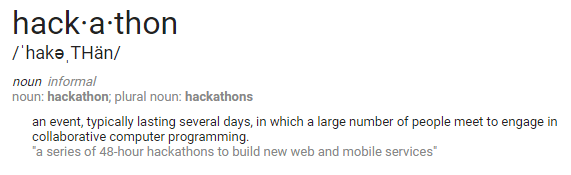
Hackathon How-To
Recently, my company did its second-ever hackathon. It was somewhat thrown together, but I think the results were amazing. It provided all the scrum teams with a much-needed break from the everyday grind, but more importantly, it gave them the opportunity to work on something they felt passionately about. My company wants to give these…
 Scrum Bubbles