
-

AI-Driven Collaboration: The Future of Hyper-Agility
The evolution from Agile to Hyper-Agile teams emphasizes real-time collaboration and responsiveness over speed. By leveraging AI and integrated tools, teams can make faster, informed decisions, blending synchronous and asynchronous work effectively. This cultural shift fosters transparency, experimentation, and shared ownership, ensuring agility serves value delivery and continuous improvement.
-

Spec-Driven Development Meets Agile: A Hybrid Approach
The post discusses the evolution of Agile methodologies towards a hybrid model that integrates Spec-Driven Development (SDD) for stability and traditional Agile for adaptability. This approach balances clarity and creativity, addressing the needs of complex projects in regulated industries while focusing on outcomes rather than outputs, ultimately enhancing team autonomy and alignment.
-

The Future of Agile: AI-Powered Tools for Success
In 2025, AI is actively enhancing Agile practices by aiding in planning, coding, and structuring workflows. Instead of replacing human roles, it augments Agile leadership and fosters creativity. Agile coaches now act as AI interpreters, facilitating better decision-making. The integration of AI emphasizes the importance of adaptability while preserving human-centric values.
-
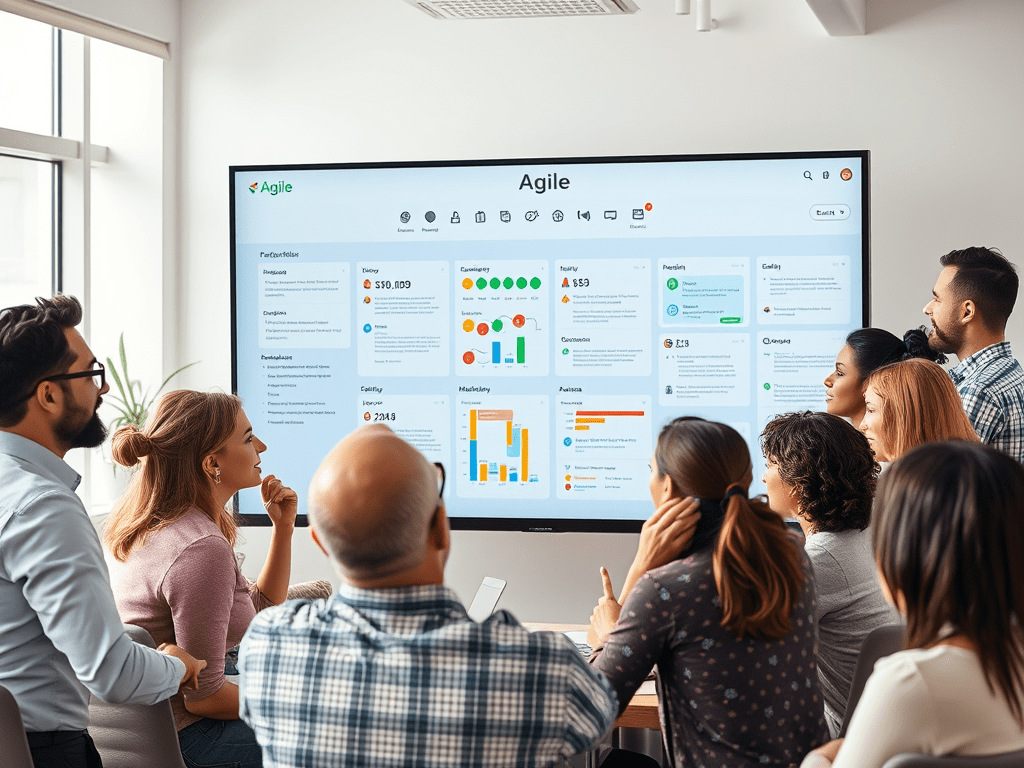
Agile Tooling Beyond Engineering—The Evolution of Jira and OthersAgile
Agile tools have evolved beyond software teams, now aiding HR, marketing, finance, and operations in managing workflows. While platforms like Jira and Asana enhance collaboration, caution is needed to maintain a human-centered approach. These tools should support agility, focusing on people and outcomes rather than becoming compliance-driven metrics.
-

Adopting an Agile Mindset Across the Organization
Agility transcends software, emerging as a crucial mindset for all business functions facing rapid changes. Organizations must focus on shared values and behaviors, with leaders modeling agility through inquiry and adaptability. By fostering collaboration and prioritizing learning over mere output, companies enhance resilience and responsiveness, driving continuous value delivery.
-

Navigating Agile Culture Clashes
Agile transformations fail primarily due to cultural misalignment rather than technical processes. Addressing this requires openly acknowledging cultural tensions, reframing Agile values in familiar language, identifying cultural advocates, and balancing patience with persistent advocacy for Agile principles. Successful integration fosters a progressive culture without discarding beneficial traditions.
-

Agile & AI: From Genie-Level Hype to Practical Collaboration
AI is likened to an unpredictable genie in Agile workflows, offering powerful possibilities alongside risks. Agile practitioners should prioritize safety by framing AI adoption as experimentation, use AI to enhance human capabilities rather than replace them, focus on clear objectives, and cultivate adaptability in uncertainty. This ensures agility and collaborative innovation.
-

Bridging the Gap: From Doing Agile to Being Agile
The post emphasizes the importance of aligning Agile practices with core principles. It outlines steps for teams and leadership, including mapping current adherence, identifying superficial Agile behaviors, reflecting on leadership roles, creating action plans, and making reflection a regular practice. This fosters genuine agility, enhancing collaboration and delivery.
-

Master Agile Principles: The Power of Regular Reflection
The post emphasizes the importance of regular reflection for Agile teams to enhance effectiveness. Continuous improvement through structured retrospectives prevents recurring issues and fosters proactive adaptation. By identifying inefficiencies and promoting collaboration, teams can significantly improve quality and delivery speed. Reflection is essential for transforming teams into high-performing entities.
-

Empowering Self-Organizing Teams for Agile Success
Self-organizing teams, empowered to make decisions, lead to better architectures and designs. Trusting skilled teams fosters innovation and efficiency, contrasting with micromanagement that stifles progress. Ownership promotes faster decision-making and creative solutions, while lack of self-organization can cause bottlenecks and lowered morale. Agility thrives on enabling, not controlling teams.
 Scrum Bubbles