
-

AI Won’t Replace Scrum Masters — But It Will Replace Bad Meetings
Concerns about AI replacing Scrum Masters arise frequently, but the true impact lies in AI’s capability to enhance Agile processes by optimizing meetings. AI can streamline administrative tasks, allowing Scrum Masters to focus on solving systemic issues within teams. This shift emphasizes improving team dynamics over maintaining traditional ceremonies.
-

From Scrum Master to Agile Coach: Embracing Systemic Change
The evolution from Scrum Master to Agile Coach signifies a shift from team-level focus to a broader organizational perspective, enhancing systemic agility. Embedded Agile Coaches analyze inter-team dynamics, aligning strategy with execution while maintaining the crucial team support role of Scrum Masters. This dual approach optimizes both local and global performance, fostering true organizational agility.
-

AI-Driven Collaboration: The Future of Hyper-Agility
The evolution from Agile to Hyper-Agile teams emphasizes real-time collaboration and responsiveness over speed. By leveraging AI and integrated tools, teams can make faster, informed decisions, blending synchronous and asynchronous work effectively. This cultural shift fosters transparency, experimentation, and shared ownership, ensuring agility serves value delivery and continuous improvement.
-

Spec-Driven Development Meets Agile: A Hybrid Approach
The post discusses the evolution of Agile methodologies towards a hybrid model that integrates Spec-Driven Development (SDD) for stability and traditional Agile for adaptability. This approach balances clarity and creativity, addressing the needs of complex projects in regulated industries while focusing on outcomes rather than outputs, ultimately enhancing team autonomy and alignment.
-

Redefining ‘Done’: Embracing Value Stream Thinking
Agile’s focus on output metrics like velocity and sprint completion is evolving towards a value-driven approach. In 2025, “done” signifies delivering measurable value to customers. Value Stream Thinking emphasizes flow, feedback, and cultural alignment, advocating for a shift from activity-based success to outcome-oriented goals, enhancing customer satisfaction and organizational adaptability.
-

From DevOps to Platform Engineering: A Cultural Shift
Platform engineering is emerging as the next phase of DevOps, shifting focus from individual ownership of delivery pipelines to organizational responsibility for the developer experience. This evolution enhances agility and fosters collaboration, with AI supporting infrastructure and streamlining processes. Ultimately, platform engineering aims to deliver value through culture and improved metrics rather than mere outputs.
-

The Future of Agile: AI-Powered Tools for Success
In 2025, AI is actively enhancing Agile practices by aiding in planning, coding, and structuring workflows. Instead of replacing human roles, it augments Agile leadership and fosters creativity. Agile coaches now act as AI interpreters, facilitating better decision-making. The integration of AI emphasizes the importance of adaptability while preserving human-centric values.
-

LeSS Basics: Insights from My Recent Course with Angela Johnson
I recently completed a two-day LeSS (Large Scale Scrum) Basics course taught by Angela Johnson, a dynamic instructor well-versed in Agile methodologies. LeSS promotes simplicity through centralized backlogs and empowered product owners, encouraging cross-functional feature teams to deliver value. Even partial implementation can enhance organizational agility and efficiency.
-
Agile Tooling Beyond Engineering—The Evolution of Jira and OthersAgile
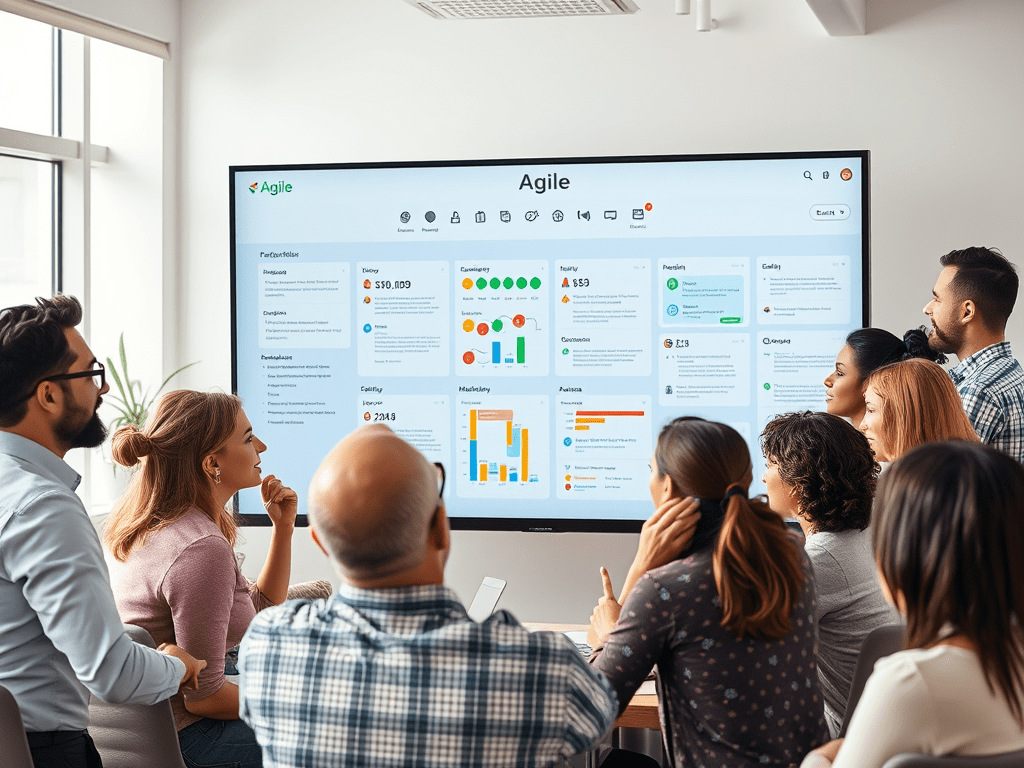
Agile tools have evolved beyond software teams, now aiding HR, marketing, finance, and operations in managing workflows. While platforms like Jira and Asana enhance collaboration, caution is needed to maintain a human-centered approach. These tools should support agility, focusing on people and outcomes rather than becoming compliance-driven metrics.
-

Adopting an Agile Mindset Across the Organization
Agility transcends software, emerging as a crucial mindset for all business functions facing rapid changes. Organizations must focus on shared values and behaviors, with leaders modeling agility through inquiry and adaptability. By fostering collaboration and prioritizing learning over mere output, companies enhance resilience and responsiveness, driving continuous value delivery.
 Scrum Bubbles